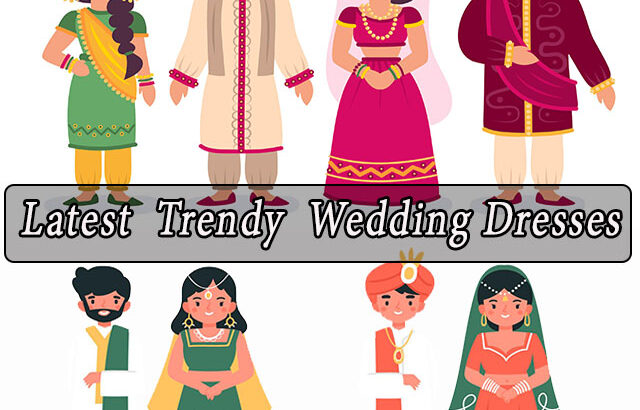
Wedding dresses are formal dresses worn by brides on their wedding day. They come in a variety of styles, designs, fabrics, and colors, depending on the bride’s preferences, cultural or religious traditions, and the formality of the wedding.
Some popular styles of wedding dresses include the ballgown, A-line, mermaid, sheath, and tea-length. Ballgowns have a fitted bodice and a full skirt, while A-line dresses have a fitted bodice that flares out from the waist, resembling the shape of the letter A. Mermaid dresses are fitted through the bodice, hips, and thighs, then flare out at the bottom, while sheath dresses have a narrow, straight silhouette that skims the body. Tea-length dresses are hemmed to fall just above or below the knee, and are often less formal than full-length gowns.
Wedding dresses can be made from a variety of fabrics, including silk, satin, lace, tulle, and chiffon. They may also feature intricate beading, embroidery, or other embellishments, and can be worn with veils, tiaras, and other accessories to complete the bridal look.
Choosing the perfect wedding dress is a big decision, and brides-to-be often spend months searching for the right one. It’s important to consider factors such as the venue, the season, and the overall style of the wedding when choosing a dress, as well as finding a dress that makes the bride feel confident and beautiful on her special day.
Wedding dresses in India vary greatly depending on the region, religion, and cultural traditions. Here are some popular styles of latest fashion trends for indian wedding dresses :
- Sarees: The traditional Indian wedding saree is a long piece of cloth draped around the body, with one end draped over the shoulder. Sarees come in a variety of fabrics, colors, and styles, and are often heavily embellished with embroidery, beads, or sequins. It is typically made of silk. The blouse worn with the saree is often heavily embellished and can be styled in a variety of ways.
- Lehenga: A lehenga is a long skirt that is usually paired with a matching blouse and a dupatta (a long scarf). Lehengas are often made of silk or other luxurious fabrics, and It is often heavily embroidered or embellished with intricate work, such as zardozi, sequins, or beadwork and other decorative elements.
- Anarkali suits: Anarkali suits consist of a long dress that is fitted at the top, flowing dress that flares out from the waist, paired with a dupatta. Anarkalis are often made of lightweight fabrics like chiffon or georgette, silk or other luxurious fabrics and are adorned with intricate embroidery or embellishments.
- Sherwani: A Sherwani is a long coat that is worn by the groom on his wedding day. It is typically made of silk or other luxurious fabrics and is heavily embellished with embroidery or other decorative elements.
- Salwar kameez: Salwar kameez is a traditional two-piece outfit consisting of a long tunic (kameez) and loose pants (salwar), worn with a dupatta. Salwar kameez is a popular wedding attire in North India and is often made of luxurious fabrics like silk or velvet, cotton and can be heavily embellished with embroidery or other decorative elements.
- Bridal gowns: Bridal gowns are a relatively new addition to the Indian wedding fashion scene, and are often seen in Christian weddings. They are typically made of luxurious fabrics like silk or satin, and may feature elaborate embroidery or beading.
In recent years, modern wedding dresses have also become popular in India, with brides opting for fusion styles that combine traditional elements with contemporary designs. When choosing a wedding dress in India, it’s important to consider the regional and cultural traditions, as well as personal style preferences. Brides often accessorize their dresses with jewelry, hair accessories, and mehndi (henna) designs on their hands and feet.